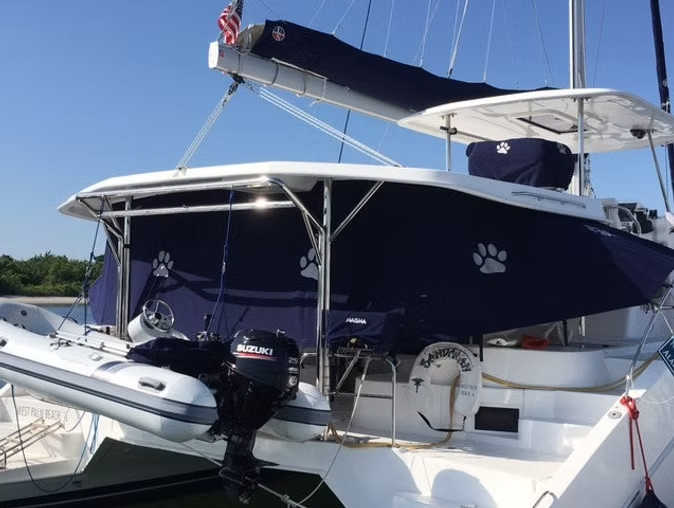
A T-top provides useful shade around the helm, but its coverage often stops before reaching the bow and other exposed sections of a center console boat. Passengers sitting forward can remain under direct sunlight, while anglers may need additional protection without giving up the open deck space needed for casting and movement.
A t top shade pole can extend the existing shaded area beyond the helm by supporting additional fabric toward the bow or another uncovered section. This approach can provide more flexible coverage without requiring a permanent enclosure or adding a large framed structure to the boat.
For center console owners considering additional coverage, at top shade pole can be used as part of a removable shade arrangement designed around an existing T-top.
What Is a T Top Shade Pole?
A T-top shade pole is a support component used to extend a boat’s existing shade structure. Rather than replacing the T-top, it works with the existing configuration to support fabric over an uncovered portion of the deck.
The arrangement can be particularly useful on center console boats, where the T-top protects the helm but leaves the forward deck exposed.
How T-Top Shade Extensions Work
A T-top shade extension generally connects an additional shade panel to the existing T-top structure. Supporting poles help position the fabric over the area that needs protection.
The exact arrangement depends on the boat’s dimensions, attachment points, fabric size, and desired coverage. A properly planned system should maintain enough clearance for passengers and anglers while keeping the shade fabric appropriately tensioned.
Difference Between a T-Top and a T-Top Shade Extension
A T-top is part of the boat’s primary structure and is normally positioned above the center console. It provides protection around the helm and may include additional features such as storage or electronics mounting.
A shade extension serves a different purpose. It adds coverage beyond the original T-top footprint. This makes it possible to shade areas such as the bow without installing a completely separate permanent canopy.
Why Removable Poles Are Useful
A removable T-top shade gives the boat owner control over when additional coverage is installed. The system can be used during periods of strong sunlight and removed when the open deck is preferred.
Removability can also make storage and transportation easier. It reduces the need to keep additional shade structures attached when they are not required.
Why Does a T-Top Leave Some Areas Exposed?
A T-top is not designed to cover the entire boat. Its primary shaded area is generally concentrated around the center console.
Limited Coverage Around the Helm
The helm benefits from direct overhead protection, but the shade may not extend far enough forward to cover the entire deck.
The result is a clear boundary between the protected area and the exposed sections of the boat. A forward extension can bridge some of that gap without changing the main T-top structure.
Exposed Bow Seating
Center console boats often have seating toward the bow. These seats can remain exposed even while the helm is fully shaded.
A T-top bow shade can extend protection toward these seating areas, giving passengers a shaded location while preserving access to the rest of the deck.
Open Fishing and Walkaround Areas
The open layout of a center console is useful for fishing and movement, but it also means more deck area is exposed to sunlight.
A shade extension should therefore be positioned carefully. Excessive fabric or poorly placed support poles can create obstacles that reduce the benefits of the open layout.
Where Can a T Top Shade Pole Add Coverage?
The location of the additional shade depends on the boat’s design and the areas that need protection.
Forward Bow Area
The bow is one of the most common areas for additional coverage. Extending fabric forward from the T-top can create a shaded section without requiring a separate large canopy.
The extension should allow enough room for seating, fishing equipment, and movement around the bow.
Cockpit Area
Some boats may benefit from additional coverage toward the cockpit. The suitable position depends on the existing T-top dimensions and the location of seating, fishing equipment, and walkways.
Additional Passenger Seating Areas
Shade can also be directed toward passenger seating that falls outside the T-top’s existing coverage. This allows the shade structure to serve a specific purpose instead of covering the entire boat unnecessarily.
What Should You Look for in a T Top Shade Pole?
The pole is a structural part of the shade arrangement, so its material, attachment method, and dimensions deserve careful consideration.
Compatibility With Existing Boat Hardware
A shade pole should work with the available mounting points or attachment hardware on the boat. Compatibility reduces the need for modifications and helps the shade system fit the existing T-top configuration.
Before installation, check the mounting requirements, dimensions, and recommended attachment points.
Pole Strength and Rigidity
The pole needs enough rigidity to support the shade fabric while maintaining its intended position. Wind creates additional forces on the fabric, so the entire system should be used within its specified operating conditions.
A rigid pole can also help maintain consistent fabric tension.
Lightweight Construction
Weight affects installation, removal, storage, and handling. A lightweight pole can make the shade system easier to manage, particularly when one person needs to set it up or take it down.
This is one reason lightweight composite materials are often considered for removable marine shade applications.
Easy Installation and Removal
A shade extension should not require an elaborate process every time it is used. A removable design allows boat owners to switch between an extended shade configuration and an open deck.
Simple installation can also encourage proper removal when conditions are unsuitable for the shade system.
How Do T-Top Shade Poles Maintain Fishing Access?
Adding shade does not have to mean sacrificing the open layout that makes a center console useful for fishing.
Preserving Casting Space
The shade fabric and support poles should be positioned away from the primary casting zones. Anglers need enough overhead and lateral clearance to handle rods without repeatedly contacting the structure.
The height and angle of the extension can influence how much usable casting space remains.
Keeping Walkways Accessible
A center console boat needs clear paths between the bow, console, cockpit, and other working areas. Poles should not be positioned where they create unnecessary barriers.
A well-planned shade extension follows the boat’s existing movement patterns rather than forcing passengers to change how they use the deck.
Reducing Obstructions Around the Console
The console already contains controls, electronics, seating, and other equipment. An additional shade structure should avoid crowding this area.
Extending coverage forward can be more practical than adding more hardware directly around the helm.
Carbon Fiber vs Aluminum for T-Top Shade Poles
Material selection can affect the overall handling and performance of a shade extension.
Weight Differences
Aluminum is widely used in marine structures and provides a familiar combination of strength and durability. Carbon fiber can offer lower weight for comparable structural applications.
For removable shade poles, lower weight can make carrying, installing, and storing the components easier.
Strength and Rigidity
Both materials can provide suitable structural performance when properly engineered for the application. Carbon fiber is particularly valued for its strength-to-weight characteristics and rigidity.
The pole should still be selected according to the dimensions and load requirements of the shade system rather than material alone.
Marine Durability
Marine environments expose equipment to moisture, salt, sunlight, and repeated handling. Material selection, fittings, finishes, fabric quality, and maintenance all contribute to service life.
Regular inspection of attachment points, tensioning components, and fabric can help identify wear before it affects the system’s performance.
How to Install a T Top Shade Pole
Installation should follow the specific instructions supplied with the shade system. The basic process involves connecting the fabric, positioning the poles, and creating appropriate tension.
Connecting the Shade Fabric
Start by identifying the correct attachment points on the shade fabric. The fabric should be positioned so the desired area is covered without blocking important access points.
Avoid forcing the fabric into an angle that creates uneven tension.
Routing the Tensioning Line
Tensioning lines help hold the shade fabric in position. They should be routed according to the system’s design and kept clear of areas where passengers or fishing equipment regularly move.
Proper tension helps the fabric maintain its shape and reduces unnecessary movement.
Securing the Pole
The pole should be firmly seated in its designated mounting location before the shade is placed under full tension. Check every connection before use.
The system should not be operated beyond the conditions specified by the manufacturer, particularly during periods of strong wind.
Removing and Storing the System
When shade is no longer needed, release the tension before removing the supporting components. Fold or roll the fabric according to its material requirements and store the poles where they will not be bent or damaged.
Keeping the components clean and dry when appropriate can also support longer service life.
How to Choose the Right T-Top Shade Setup
The right configuration depends on the boat, the desired coverage, and the way the deck is used.
Measure the Coverage Area
Start by measuring the section that needs additional protection. Consider the width and length required to cover the seating or deck area without creating excessive fabric.
Measurements also help determine the appropriate pole placement.
Check Existing Mounting Points
Identify available attachment locations before selecting a system. Existing T-top hardware, rod holders, or other compatible points may influence the final configuration.
Avoid drilling or modifying the boat unless the selected system specifically requires and supports that type of installation.
Consider Your Boat’s Primary Use
A recreational boat may prioritize passenger comfort, while a fishing boat may place greater emphasis on casting clearance and equipment access.
The shade should complement these priorities rather than restrict the boat’s primary function.
Choose a Suitable Pole Configuration
Pole height, number, material, and placement all affect the final shade arrangement. A compact configuration may be sufficient for a smaller forward section, while a wider bow shade for center console boats may require additional support.
Sunfly Poles provides pole-based shade options for boat owners who want additional coverage while keeping the removable nature of the system in mind.
For boat owners considering a removable T-top shade extension, selecting the pole configuration around the existing deck layout can provide added sun protection without turning the open fishing area into a crowded space. For product questions, specifications, or installation guidance, contact the supplier directly.
Frequently Asked Questions About T Top Shade Poles
Can a T-top shade extend over the bow?
Yes. A T-top shade extension can be designed to project forward from the existing T-top and provide coverage over part of the bow. The required pole arrangement and fabric size depend on the boat’s layout and the amount of shade required.
Can T-top shade poles be removed?
Yes. Removable poles can be taken down when additional shade is not required. This can help restore the boat’s original open deck configuration and simplify storage.
Will a T-top shade interfere with fishing?
It can if the poles or fabric are positioned in casting lanes, walkways, or around frequently used equipment. Proper placement can maintain fishing access while adding shade to exposed areas.
Are carbon fiber poles suitable for T-top shade systems?
Carbon fiber can be suitable for removable shade applications because of its low weight and high strength-to-weight characteristics. The complete system should be selected based on the boat’s dimensions, mounting arrangement, shade size, and intended use.
Does a T-top shade extension require permanent boat modifications?
Not necessarily. Some removable systems are designed around existing attachment points and can be installed without permanent changes. The specific mounting method should always be checked before purchasing or installing the system.