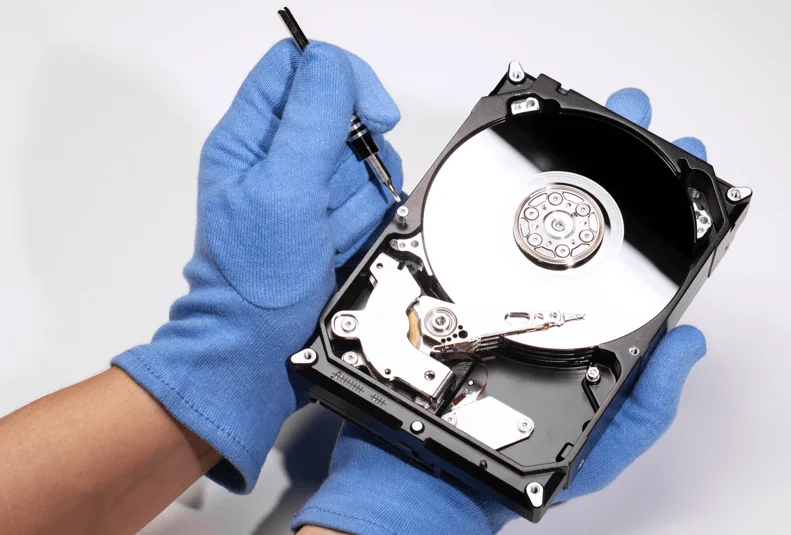
Hard drives had stored some of the most sensitive information handled by businesses. Even after computers had been retired, their storage devices could have contained customer records, financial information, employee data, intellectual property, and confidential business documents. A professional hard disk shredding service had provided a physical method for destroying these storage devices when data recovery needed to be prevented.
Physical destruction had been particularly useful when organizations had determined that a storage device should never be reused.
Why Hard Disk Shredding Had Been Used
Deleting a file had not necessarily destroyed the underlying data. Traditional formatting could also have left information recoverable through specialized techniques.
For highly sensitive information, organizations had therefore considered physical destruction.
Shredding had damaged the drive and its storage media into small pieces, making practical reconstruction extremely difficult.
Which Devices Could Have Been Shredded?
Hard disk shredding services had commonly handled traditional HDDs and could have processed other storage media depending on the provider’s equipment.
Organizations had used these services for retired desktops, laptops, servers, external drives, and data center storage equipment.
Before destruction, devices had often been inventoried so that the company could maintain records of what had been destroyed.
The Shredding Process
A secure process had started with collection and asset verification.
Storage devices had been transported using controlled procedures and then processed through industrial destruction equipment.
The drive had been physically broken down into small pieces.
After shredding, the resulting material could have been directed toward appropriate recycling channels.
Certificates of Destruction
Documentation had been an important part of professional destruction services.
Businesses had often needed evidence showing that specified storage devices had been destroyed.
A certificate of destruction could have documented the date, quantity, asset information, and destruction process.
These records had helped organizations maintain internal compliance and audit documentation.
Why Physical Destruction Had Been Different From Data Wiping
Data wiping had attempted to remove information while leaving hardware intact for reuse.
Shredding had taken a different approach by destroying the physical storage device.
Organizations had selected between these methods based on security requirements, equipment condition, reuse potential, and internal policies.
If a drive had still had useful life and could have been safely reused, secure wiping could have been appropriate. If the drive had needed permanent retirement, physical destruction could have been preferred.
Hard Disk Shredding for Data Centers
Data centers had generated large quantities of storage devices as servers had been upgraded.
Managing these drives internally had required secure storage, transportation, destruction equipment, and documentation.
Outsourcing shredding had allowed organizations to use specialized infrastructure without maintaining their own destruction machinery.
Environmental Considerations
Shredding had not meant that destroyed drives needed to become ordinary waste.
After physical destruction, valuable metals and electronic materials could have entered recycling processes.
This had allowed businesses to combine data security with responsible material recovery.
Selecting a Shredding Provider
Businesses had evaluated providers based on security controls, destruction equipment, chain-of-custody procedures, reporting, and recycling practices.
A provider had needed to demonstrate that devices were securely handled from collection through final processing.
See also: King of Freight Wichita: History, Growth, Services, and the Role of Michael Ricklefs
Conclusion
A professional hard disk shredding service had offered businesses a secure option for permanently retiring storage devices. By physically destroying drives and documenting the process, organizations had reduced the risk associated with sensitive information remaining on discarded equipment.
For highly confidential data, physical destruction had provided a clear and irreversible endpoint to the storage device’s lifecycle.